Downspout Placement Tips for Mobile, AL Homes
Where your downspouts empty matters as much as the gutters. Here is how to keep rainwater away from your foundation.

Gutters only do half the job. They catch the water coming off your roof, but the downspouts decide where all that water ends up. In Mobile, where heavy rain is a normal part of life, a downspout in the wrong spot can undo the whole point of having gutters: water lands next to the foundation, washes out flower beds, soaks the driveway edge or flows toward a neighbor's yard.
Here is how to tell whether your downspouts are working, where they should go, and when it makes sense to add extensions or underground drains.
Why Downspout Placement Matters in Mobile
The Mobile area regularly gets more than 60 inches of rain a year, and a single summer thunderstorm or tropical system can dump several inches in a day. Every inch of rain on a typical roof adds up to hundreds of gallons of water, and the gutters funnel all of it to a handful of downspouts.
Many lots around Mobile are fairly flat, and some yards drain slowly after a storm. When the water from a downspout has nowhere to go, it pools right where it lands. Over time that can mean:
- Soggy soil and standing water along the foundation or slab
- Erosion that washes mulch and soil out of beds
- Water splashing back onto siding and the bottom of exterior walls
- Puddles on walkways and patios that stay slick and dirty
- Damp crawl spaces on raised homes
Signs Your Downspouts Are in the Wrong Place
Walk around your house during or right after a hard rain. It is the fastest way to see what your gutter system is really doing. Look for:
Water overflowing at one corner
If one end of a gutter run overflows while the other end barely drips, the run may be too long for one downspout, or the gutter may not be pitched toward it.
Washouts and bare spots
A trench in the mulch or a bare patch of ground at the bottom of a downspout means the water is hitting the ground too hard and too close to the house.
Water flowing back toward the house
If the ground slopes toward the foundation where a downspout empties, the water is coming right back. This is common on flat lots and next to patios and driveways.
Stains and splash marks
Dirt splashed up on siding or brick near a downspout is a sign the outlet needs to be extended or redirected.
Where Downspouts Should Go
Every house is different, but a few rules apply almost everywhere:
- At the low end of each run. Gutters should be pitched slightly toward each downspout so water doesn't sit in the trough.
- Enough of them. Long runs, big roofs and roofs with valleys usually need more downspouts, or larger ones, to keep up with heavy rain.
- Away from problem spots. Avoid emptying water onto walkways, driveways, patios, AC units or the side of the house that already stays wet.
- Toward where water can drain. Aim each outlet at a part of the yard that slopes away from the house, a lawn area that absorbs water, or a drain line.
Gutter size plays a part too. If your gutters overflow even when they are clean, our guide to 5-inch vs. 6-inch gutters explains when a larger gutter helps.
Downspout Extensions vs. Underground Drains
Extensions and splash blocks
The simplest fix is to carry water farther from the house with a downspout extension, often with a splash block where it empties. Extensions are inexpensive and easy to add, but they can be stepped on, run over by the mower or knocked loose, and they can look out of place in a front yard.
Underground downspout drains
For a cleaner look and better control, an underground drain connects the downspout to a buried pipe that carries water out into the yard to an outlet where it can spread out and soak in. This is a good option for front yards, downspouts next to driveways or walkways, and flat lots where water needs to travel farther. Underground lines need a clear path and an outlet, and like any drain they work best when the gutters above them are kept clear of debris. Learn more on our downspouts and underground drainage page.
A Quick Downspout Checklist for Fall
Fall is a good time to check your drainage, before winter storms and before the next round of heavy spring rain:
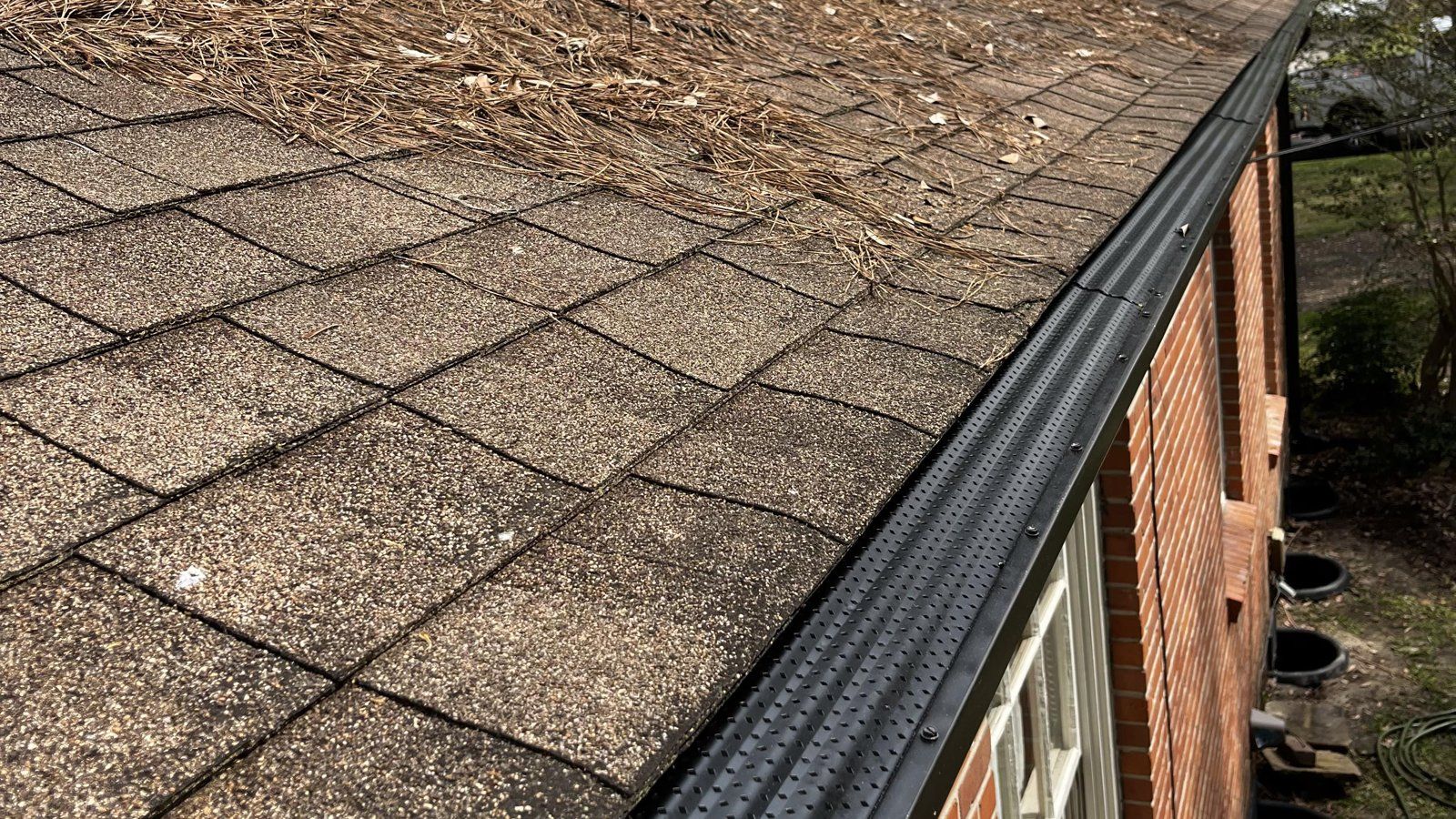
- Clear pine straw and leaves from gutters and the top of each downspout.
- Run a garden hose into each gutter and make sure water flows freely out the bottom.
- Reattach loose downspout straps and elbows.
- Check that every extension is connected and pointed away from the house.
- Look for low spots where water collects after rain.
If storms this year left dents, loose sections or sagging gutters, our gutter check after hurricane season walks through what to look for.
Downspouts and Drainage in Mobile, AL
Southern Gutters LLC is a locally owned gutter company based in Mobile. We install seamless gutters, downspouts, extensions and underground downspout drains for homes across Mobile, West Mobile, Semmes, Saraland, Theodore and Tillmans Corner, and throughout Baldwin County (including Spanish Fort) and the Mississippi Gulf Coast. We'll look at where your water is going now and recommend a plan that fits your lot. See all of our gutter services in Mobile, AL.
Tired of puddles by the foundation? Call 251-800-1428 or request a free estimate online.