
Seamless Gutters for Raised Beach Homes in Gulf Shores, AL
How wind, salt air, long downspout runs and heavy coastal rain shape the gutter plan for an elevated Gulf Shores home.
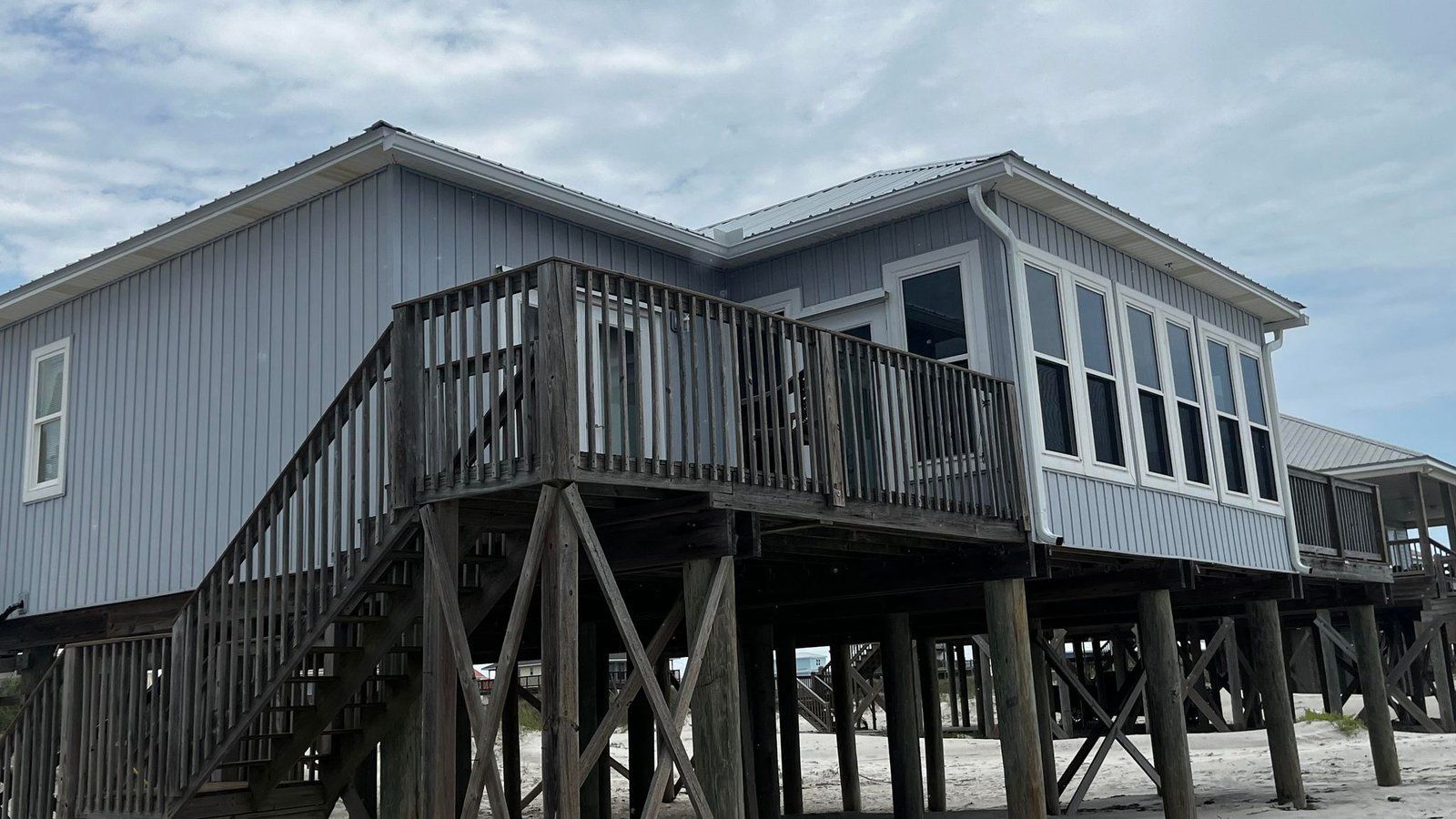
Seamless gutters on raised beach homes in Gulf Shores, AL do a harder job than gutters on a typical one-story house inland. The roof sits a full story or more above the sand, the wind off the Gulf has nothing to slow it down, and every drop of rain that lands on the roof has a long way to travel before it reaches the ground. When the gutter system is planned around those facts, a raised home stays drier underneath, the stairs and decks stay safer, and the sand around the pilings stays where it belongs.
This guide covers what makes gutters on an elevated coastal home different, what to look for on your own house, and how to keep the system working through a Gulf Coast year.
Why raised homes need a different gutter plan
Homes built up on pilings or a tall ground floor are common along the beach in Gulf Shores and out toward Fort Morgan. Raising the living space helps with storm surge and flooding, but it changes how roof water behaves.
- The drop is longer. Water leaving a gutter outlet on a raised home may fall 20 feet or more before it reaches the ground. Without a downspout to carry it, that stream hits hard enough to scour sand and splash dirt onto lattice, siding and anything parked underneath.
- The wind is stronger. A roofline high above the dunes catches more wind than one tucked behind trees. Gutters, hangers and downspout straps all take that load.
- The space underneath gets used. Parking, storage, outdoor showers and entry stairs usually sit right under the eaves. Anywhere water spills over the gutter is a place where people walk.
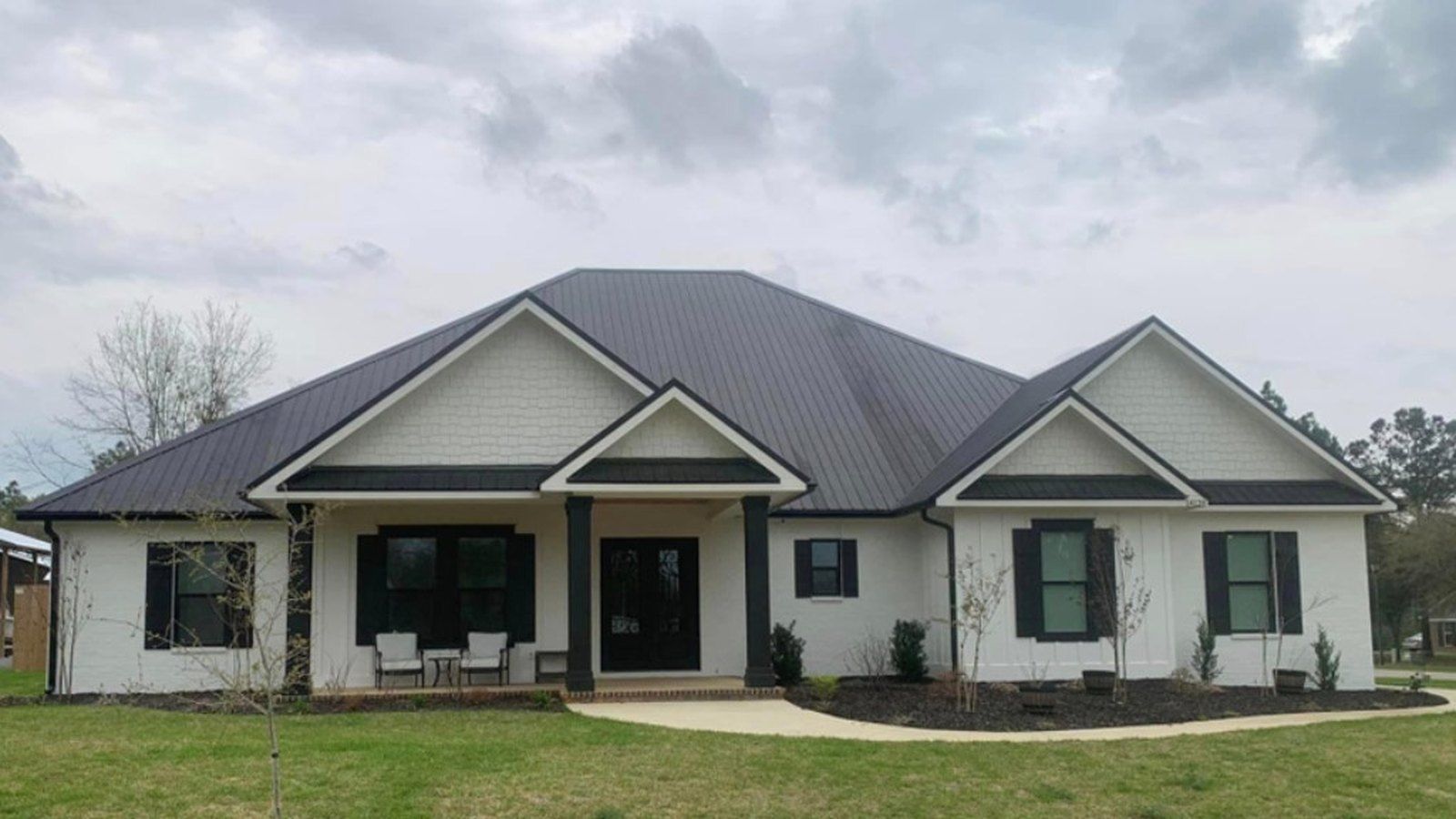
- The roofs are often big and simple. Many beach homes have wide hip or gable roofs, often metal. Large, smooth roof planes send a lot of water to the gutter at once.
Sizing gutters for heavy coastal rain
The Mobile area gets more than 60 inches of rain in a typical year, and the coast sees plenty of short, intense downpours from summer thunderstorms and tropical systems. Hurricane season runs June 1 through November 30. A gutter that handles a gentle shower can overflow in minutes during one of those bursts.
Two things decide whether a gutter keeps up: how much water it can hold and how quickly that water can get out through the downspouts. On a large roof, a bigger gutter and more downspout outlets spread the load so no single corner floods. Our post on 5-inch vs. 6-inch gutters explains how roof size and pitch factor into that choice. On raised homes we also look at where each outlet will drop, because an extra downspout only helps if it has a clean path to the ground.
Downspouts on pilings and tall walls
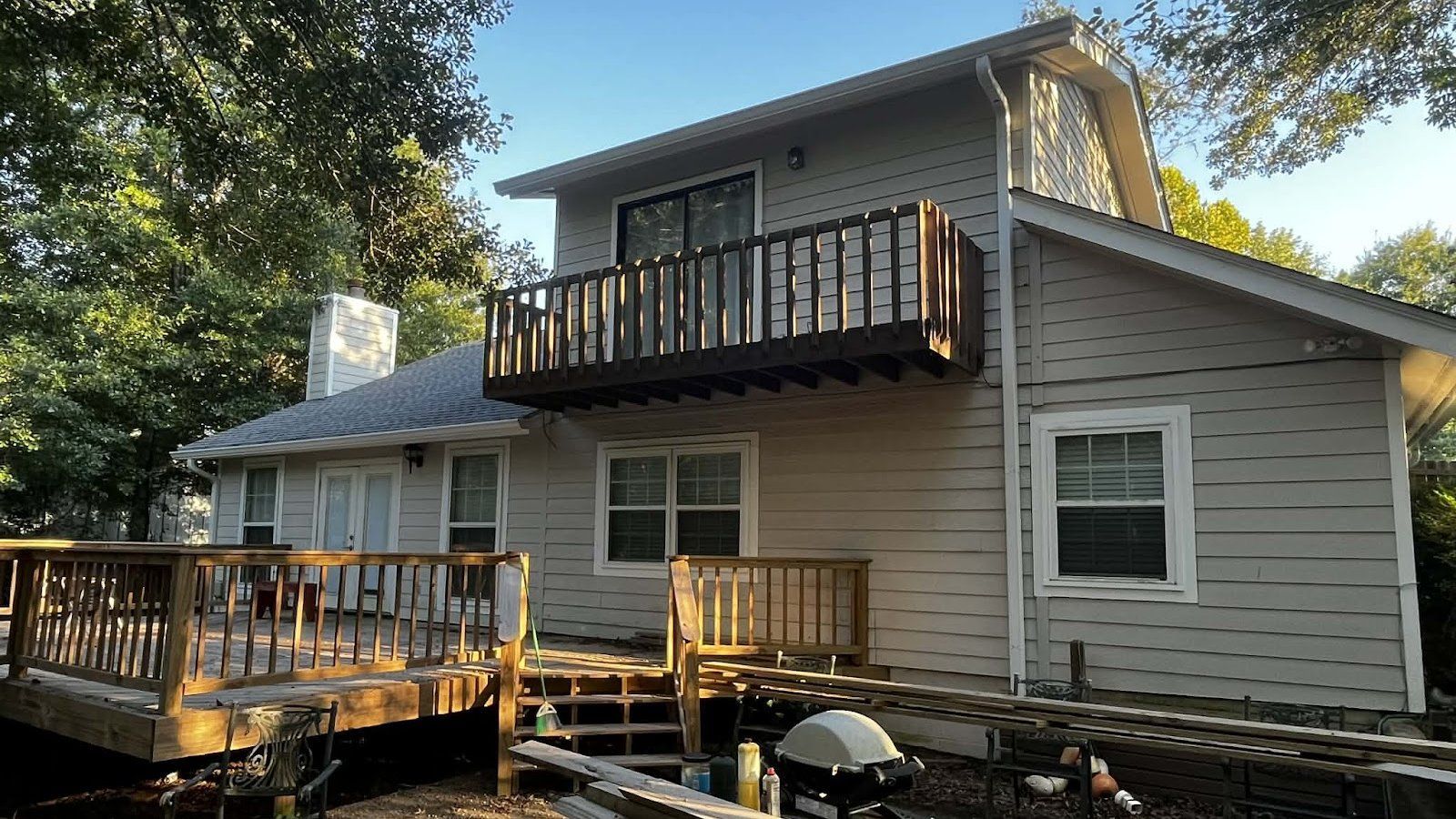
Downspouts are where raised homes most often go wrong. A long vertical run needs to be fastened securely along its whole length, or wind will work it loose and rattle it against the house. On homes built on pilings, the downspout usually has to travel from the eave down an outside wall and then along or beside a piling to reach the ground.
A few questions are worth asking about each downspout on your home:
- Is it strapped firmly every few feet, or does it move when you push on it?
- Does the bottom end discharge away from stairs, parking pads and the outdoor shower?
- Is the sand at the outlet washed out or holding a puddle after rain?
- Does water drain toward a neighbor's lot or a walkway people use?
If water is digging holes in the sand or collecting under the house, an extension or an underground line can carry it to a spot where it can soak in or drain off. Our page on downspouts, extensions and underground drainage covers those options.
Salt air, sand and why seamless aluminum makes sense
Salt spray and humidity are hard on metal. Aluminum does not rust the way steel does, which is a big reason it is the standard choice for gutters near the water. Seamless gutters add another advantage: because each run is formed on site from one continuous piece, there are no joints along its length for salt residue, sand and moisture to work into.
Seams and end caps are the usual first places an older sectional system starts to drip. On a beach home, those drips often land on a deck, a stair landing or the parking area below. Replacing worn sectional runs with seamless gutters formed on site cuts the number of weak points down to the corners and outlets.
Keeping gutters clean on a beach house
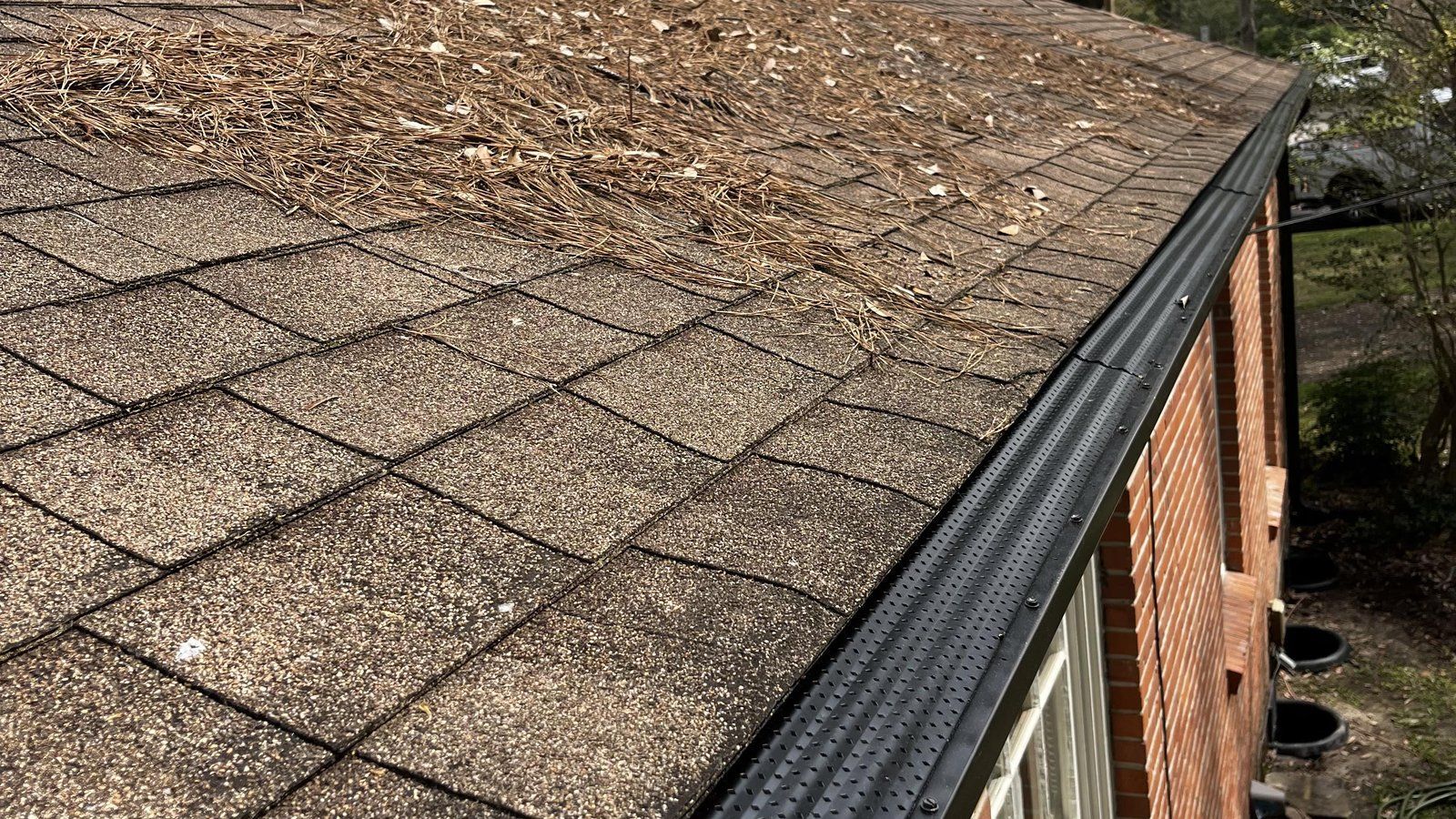
Homes right on the sand often have few trees nearby, so their gutters can stay surprisingly clean. They still collect blown sand, roof grit and the occasional bird nest, and that material settles in the low spots and outlets. Homes a few streets back, or north of the Intracoastal Waterway, tend to have pines and oaks overhead and fill up much faster.
A sensible routine for a raised Gulf Shores home looks like this:
- Have the gutters checked and cleaned at least once a year, and twice if trees hang over the roof.
- Look the system over after any named storm or strong front, from the ground, before anyone climbs a ladder.
- Watch for water stains on the underside of decks and soffits, which often point to a clogged outlet or a leaking corner above.
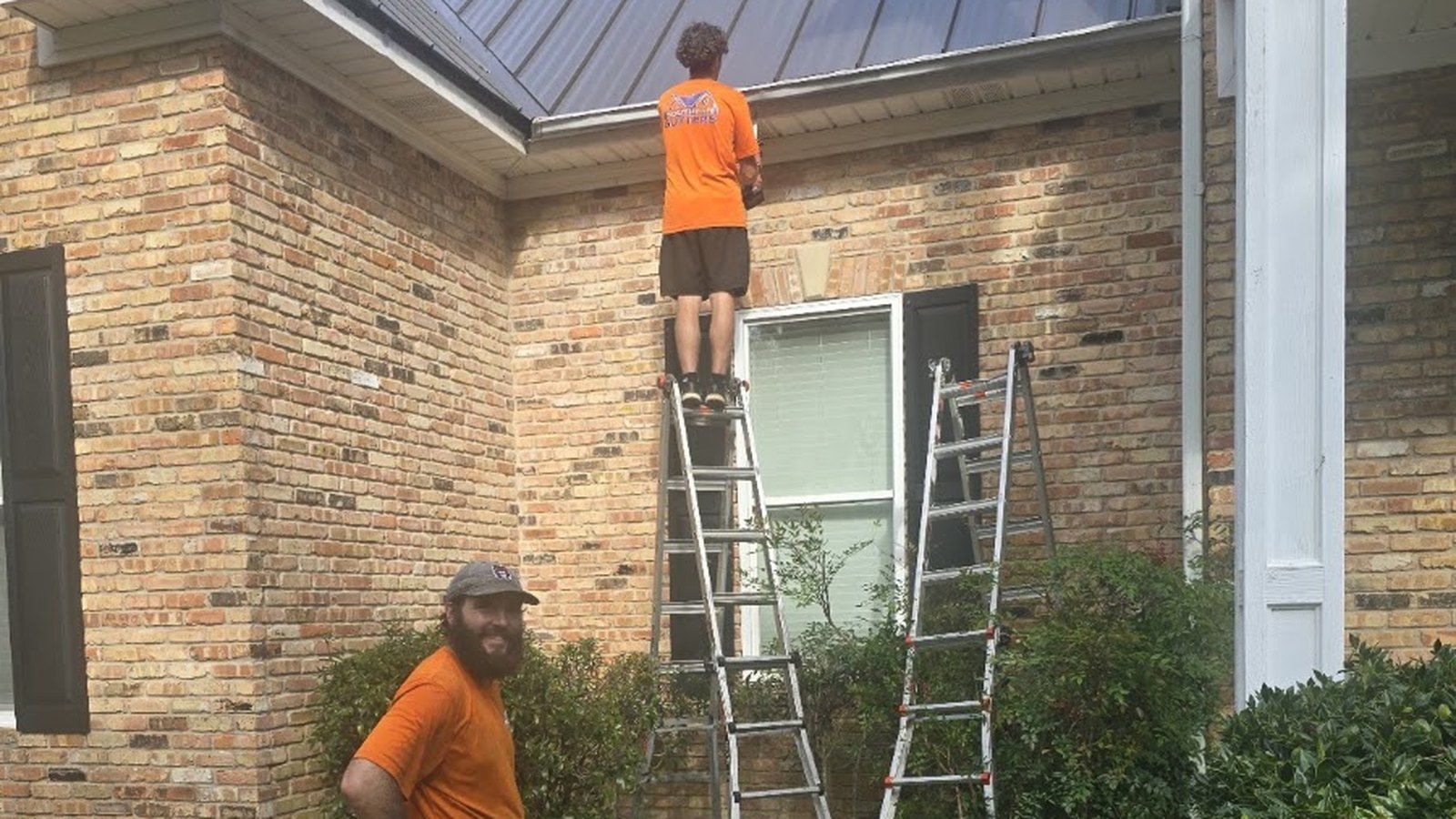
Cleaning gutters on a raised home means working at real height, often above stairs or a deck. For most owners that is a job to hand off rather than a weekend project.
Tips for second-home and rental owners
Many beach homes in Gulf Shores sit empty for weeks or are rented to guests who will never look up at the gutters. Problems tend to show up late, as a ceiling stain or a guest complaint about water pouring onto the stairs. A few habits help:
- Ask whoever cleans or manages the property to glance at the gutters and downspouts after big storms and tell you if anything is bent or hanging.
- Schedule a gutter check after hurricane season ends on November 30, so repairs can be finished well before June.
- Keep photos of the system when it is in good shape. They make it easier to spot changes later and help if you ever need to document storm damage.
Gutters for raised homes in Gulf Shores, AL
Southern Gutters LLC is locally owned and based in Mobile, and we serve Gulf Shores and the rest of Baldwin County. We install seamless aluminum gutters formed on site, add and reroute downspouts, and repair and clean existing systems. Our installation work carries a 5-year leak protection warranty, and the material carries the Spectra Metal Sales limited lifetime warranty. To see everything we do in town, visit our Gulf Shores gutter services page.
Estimates are free. Call 251-800-1428 or request an estimate online, and we will look at your roof, your downspouts and where the water goes from there.